
Thaj Aesthetics · Skin rejuvenation
Acne Scar Treatment in T. Nagar, Chennai
A combined plan built around your scar types.
Acne scars come in different shapes and depths, and each type responds to different techniques. At Thaj Aesthetics the doctor maps your scars and combines treatments such as fractional laser, microneedling, peels and PRP into one plan.
Bharathy Nagar, T. Nagar, Chennai
- Session time
- 30–90 minutes by method
- Typical course
- 3–6 sessions over 6–12 months
- Downtime
- From none to about a week
- Results
- Gradual, over several months
The treatment
Understanding acne scars
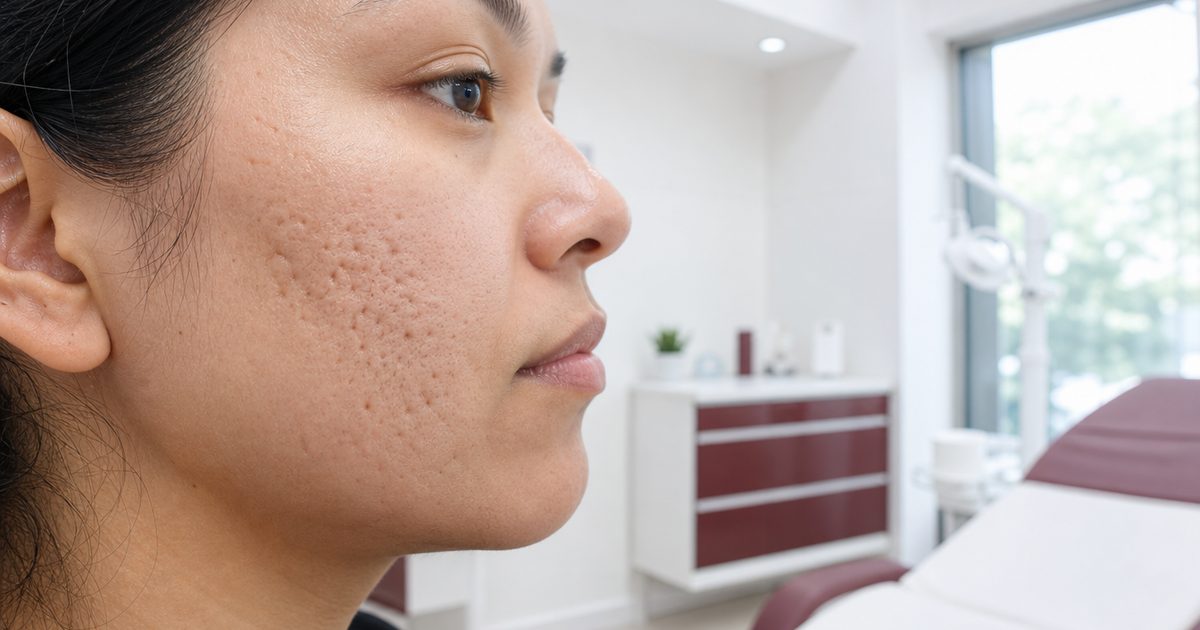
Acne scars form when inflammation damages the collagen beneath a spot. If too little collagen is rebuilt, the skin is left with a depression, known as an atrophic scar; if too much is made, a raised scar forms. Most people have a mixture of types, which is why one treatment rarely solves everything.
Atrophic scars are usually described by shape. Rolling scars are broad, soft-edged dips caused by bands of tissue tethering the skin down. Boxcar scars are wider depressions with sharp edges. Icepick scars are narrow, deep pits that reach far into the skin. Raised scars and keloids, more common on the chest, back and jaw, need a different approach again.
It also matters to separate true scars from marks. Flat brown or red marks left after acne are not scars; they usually fade with time, sun protection and treatments such as peels or laser toning. Our guide to pimple marks vs acne scars explains the difference.
Concerns
Treatments we combine
Each method suits particular scars. A typical plan uses two or three of these:
- Fractional CO2 laserResurfacing that smooths boxcar and rolling scars and overall texture; see fractional CO2 laser.
- Microneedling and RF microneedlingCollagen induction with shorter downtime, suited to rolling scars and enlarged pores; see microneedling.
- SubcisionA fine needle releases the fibrous bands that pull rolling scars down, allowing the skin to lift.
- Focused peel techniqueA high-strength acid applied precisely into individual icepick scars to stimulate collagen from the base.
- PRP and exosomesApplied after microneedling or laser to support healing; see PRP & exosomes.
- Chemical peels and skin boostersPeels refine texture and fade marks, and skin boosters improve skin quality around scars.
Step by step
How your scar plan works
- Scar mappingThe doctor examines your skin in angled light, identifies scar types and depth, and photographs them for comparison.
- Acne control firstAny active acne is treated before scar work begins, because new breakouts create new scars.
- Building the planTreatments are chosen for each scar type and sequenced, for example subcision first, then resurfacing or microneedling.
- Treatment sessionsSessions are spaced four to eight weeks apart so collagen can rebuild between them.
- ReviewPhotographs taken at intervals show how the scars are changing, and the plan is refined accordingly.
Suitability
Who can have acne scar treatment?
Anyone with settled acne and scars that bother them can be assessed. The right plan depends on scar type, skin tone, the recovery time you can allow and your timeline. If acne is still active, treating it comes first; starting scar work too early risks new scars forming.
Wait, or check with the doctor first, if you have
- Active, inflamed acne, which is treated first
- Oral acne medication in the last six months, for lasers and deeper procedures
- Pregnancy or breastfeeding
- A tendency to keloids
- Skin infection or cold sores in the area
- A fresh tan, for laser and peel treatments
Every skin tone
Acne scars can be treated in every skin tone. Deeper skin tones have a higher risk of post-inflammatory hyperpigmentation after lasers and peels, so the doctor may favour microneedling, subcision and conservative laser settings, prepare the skin beforehand and stress sun protection.
Aftercare
Aftercare and results
- Aftercare depends on the treatment, and you receive written instructions for each session.
- Sun protection with SPF 30 or more is essential throughout, as healing skin darkens easily.
- Do not pick at scabs or flaking skin after any procedure.
- Keep skincare gentle, and pause exfoliating acids and retinoid creams around sessions as advised.
- Continue any acne treatment you have been prescribed, so new scars do not form.
- Take photographs in the same light every few months; changes are gradual and easy to underestimate.
What to expect
Acne scar treatment is gradual. Each session starts collagen remodelling that continues for months, so improvement is judged over six to twelve months. Most people see scars become shallower, softer and less noticeable; complete removal is uncommon, and realistic goals are agreed at the start.
Good to know
Setting realistic goals
The aim is meaningful improvement, often a clear reduction in how visible scars are in everyday light, rather than perfectly smooth skin. Deep icepick scars and long-standing scars are the hardest to change, while rolling scars and texture tend to respond well.
Choosing the right combination matters more than any single device. A plan that matches technique to scar type, keeps acne under control and protects the skin from the sun usually gives a better and safer result than repeated sessions of one treatment.
Treatment suitability is assessed during consultation.
Questions
Acne Scar Treatments: your questions
Can acne scars be removed completely?
Complete removal is uncommon, but significant improvement is realistic for most people. Scars usually become shallower, softer and less noticeable, especially rolling and boxcar scars. Deep icepick scars are the most stubborn and may need several focused treatments.
Which acne scar treatment is right for me?
It depends on your scar types. Rolling scars often respond to subcision and microneedling, boxcar scars to fractional laser, and icepick scars to focused techniques. Most people have a mix, so a combined plan is usually recommended once the doctor has mapped your scars.
How long does acne scar treatment take?
A typical plan runs over six to twelve months, with sessions every four to eight weeks. Collagen keeps remodelling for months after each session, so results continue to improve after the final treatment.
Should I treat acne before scars?
Yes. Active acne should be controlled first, because new breakouts can cause new scars and inflamed skin heals less predictably. The doctor can plan acne care and scar treatment in the right order.
Are acne scar treatments suitable for dark skin?
Yes, with the right choices. Deeper skin tones are more prone to darkening after lasers and peels, so microneedling, subcision and conservative laser settings are often favoured, along with skin preparation and sun protection.
What is the difference between acne marks and acne scars?
Marks are flat discolourations, brown or red, left after a spot heals; they usually fade with time and treatment. Scars are changes in the skin's texture, either depressions or raised areas, and need treatments that remodel collagen.
Explore
Related treatments and guides
Thaj Aesthetics · Acne Scar Treatments
Book your consultation
Call to book your consultation, or send an enquiry.
+91 96000 23789Visit us in Chennai
1st Street, 5/3Bharathy Nagar, T. Nagar
Chennai, Tamil Nadu 600017
Enquiries
Send an enquiry
Leave your name and number. The Thaj Aesthetics team will call you back.