
Thaj Aesthetics · Laser & light-based treatments
Q-Switched Nd:YAG Laser in T. Nagar, Chennai
A nanosecond laser for pigment, tattoo ink and uneven tone.
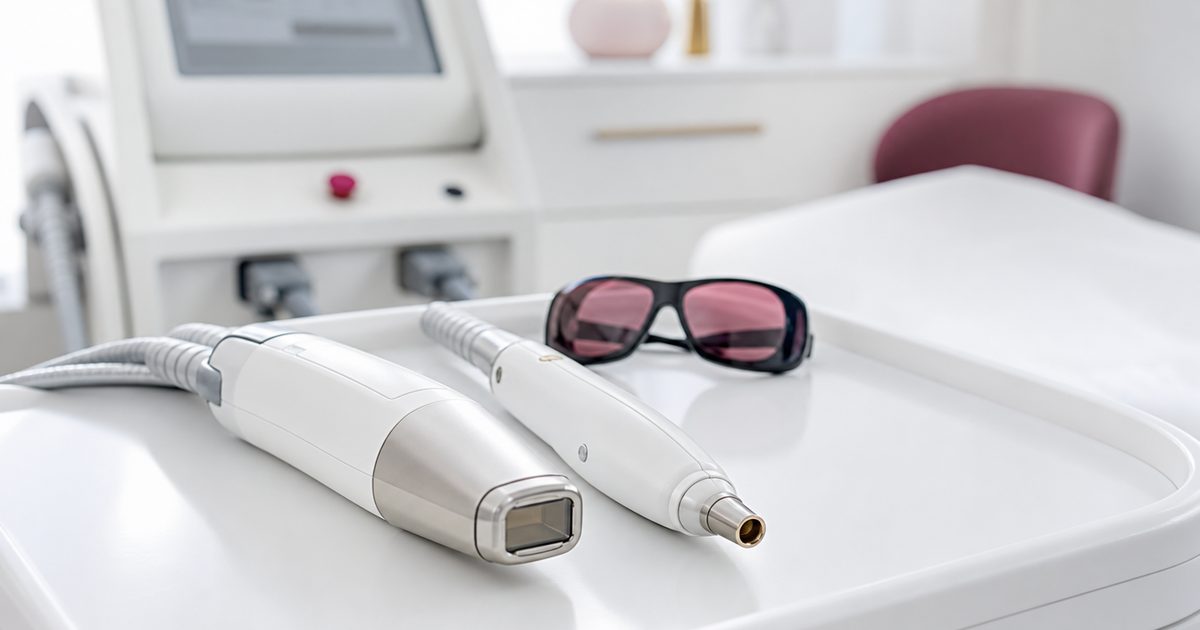
The Q-switched Nd:YAG laser releases very short, high-energy pulses that break up excess pigment and tattoo ink so the body can clear them. At Thaj Aesthetics, settings are chosen for your skin tone and the concern being treated.
Bharathy Nagar, T. Nagar, Chennai
- Session time
- 15–40 minutes
- Typical course
- 4–8 sessions for pigment
- Downtime
- Mild redness for a few hours
- Results
- Gradual, over several sessions
The treatment
What a Q-switched Nd:YAG laser does
Nd:YAG stands for neodymium-doped yttrium aluminium garnet, the crystal that produces the laser beam. Q-switched describes how the light is released: in pulses lasting a few billionths of a second (nanoseconds). Energy delivered that quickly creates a photoacoustic effect, shattering pigment particles into fragments small enough for the body's immune cells to carry away, while limiting the heat that spreads into the surrounding skin.
Most systems have two wavelengths. The 1064 nm wavelength travels deeper and is gentler on the skin surface, which makes it the usual choice for deeper pigment, dark tattoo ink and deeper skin tones. The 532 nm wavelength is absorbed closer to the surface and suits some superficial brown spots and red ink, but it carries a higher risk of temporary darkening in deeper skin tones, so it is used more selectively.
The same laser can be used in two very different ways: as a low-energy, multi-pass treatment across the whole face, often called laser toning, or as targeted, higher-energy treatment for a defined mark or tattoo. Which approach suits you is decided at consultation.
Concerns
What it can help with
The Q-switched Nd:YAG laser targets pigment. It is most often used for:
- Sun spots and frecklesFlat brown marks from sun exposure often respond within a few sessions, although fresh sun exposure can bring them back.
- Uneven tone and dullnessLow-energy passes across the face can even out a patchy, tired-looking complexion over a course of treatment.
- Tattoo removalDark blue and black inks respond to the 1064 nm wavelength; some colours need other wavelengths. Our tattoo removal guide explains how many sessions it usually takes.
- Pigmented birthmarksSome deeper pigmented birthmarks, such as naevus of Ota, can lighten gradually over many sessions spaced months apart.
- Post-acne marksBrown marks left behind after pimples (post-inflammatory hyperpigmentation) may fade faster when gentle laser is combined with sun protection.
- Melasma, with cautionVery gentle settings can help as part of a wider plan, but melasma is long term, tends to return, and aggressive laser can make it worse.
Step by step
How a session works
- Consultation and skin checkThe doctor examines the marks, asks about medicines, sun exposure and any history of pigment darkening, and confirms that laser is the right tool.
- Test spot where neededFor deeper skin tones or a first treatment, a small test area may be treated first and checked before a full session.
- PreparationThe skin is cleansed and your eyes are protected. A numbing cream is used for tattoos or more sensitive areas.
- TreatmentThe handpiece is passed over the area. Most people describe a snapping or warm, prickling feeling. Facial toning takes around 15–20 minutes.
- Cooling and protectionThe skin is soothed, sunscreen is applied, and you leave with written aftercare.
Suitability
Is it right for you?
It suits people with defined brown spots, sun damage, uneven tone or unwanted tattoos who are prepared to commit to a course of sessions and to daily sun protection. It is less useful when the main concern is texture or scarring, where a resurfacing laser or microneedling usually does more.
Wait, or check with the doctor first, if you have
- Pregnancy or breastfeeding
- A fresh tan or recent intense sun exposure
- Active infection, cold sores or open wounds in the area
- Recent oral acne medication or other photosensitising medicines; tell the doctor about everything you take
- A history of keloid scars or of marked darkening after earlier procedures
- Moles or marks that are changing, which need medical assessment first
Every skin tone
The 1064 nm wavelength can be used across all skin tones, from very light to deep brown. In deeper skin tones the energy is kept lower and sessions are spaced more widely to reduce the risk of post-inflammatory hyperpigmentation or patchy lightening.
Aftercare
Aftercare and results
- Expect mild redness or warmth for a few hours. Spot-treated marks may darken and flake over 5–10 days; let them shed on their own.
- Use a broad-spectrum sunscreen of SPF 30 or higher every day and reapply outdoors. This does more than anything else to keep results.
- Avoid scrubs, peels, waxing and strong active creams on the area for about a week.
- Skip saunas, steam rooms and swimming for 24–48 hours.
- Tattoo sites may blister. Keep them clean and covered as advised, and do not pick.
- Contact the team promptly if you notice increasing redness, pain or darkening.
What to expect
Pigment fades gradually as the body clears the fragments, so improvement builds over weeks rather than appearing at once. Superficial sun spots may need only a few sessions; melasma, birthmarks and tattoos usually need many more, and tattoos may not clear completely. Sun exposure and hormones can bring pigment back, so occasional maintenance is common.
Good to know
Q-switched or pico?
Pico lasers fire even shorter pulses, measured in trillionths of a second, and can break ink and pigment into finer particles. For stubborn tattoo colours or pigment that has stopped responding, a pico laser may need fewer sessions. For many everyday concerns, such as sun spots and toning, the Q-switched Nd:YAG laser remains a well-established option.
Laser is not the answer to every dark mark. Pigment driven by hormones, friction or inflammation often needs skincare, consistent sun protection and sometimes chemical peels alongside or instead of laser. The doctor will explain which combination makes sense for your skin.
Treatment suitability is assessed during consultation.
Questions
Q-Switched Nd:YAG Laser: your questions
How many Q-switched laser sessions will I need?
It depends on what is being treated. Sun spots and freckles often improve in two to four sessions, while toning for uneven tone usually involves four to eight sessions two to four weeks apart. Tattoos and birthmarks need more sessions, spaced six weeks or longer apart. The doctor gives you a realistic estimate after examining your skin.
Does Q-switched Nd:YAG laser treatment hurt?
Most people feel a quick snapping sensation, like a rubber band flicked against the skin, with some warmth. Facial toning is usually comfortable without numbing. Spot treatments and tattoos are more intense, so a numbing cream is applied beforehand and the skin is cooled during the session.
Is the Q-switched Nd:YAG laser safe for darker skin?
Yes, when the right wavelength and settings are used. The 1064 nm wavelength is the usual choice for deeper skin tones because it passes through the upper skin with less risk of irritation. Conservative energy, test spots and strict sun protection lower the risk of temporary darkening or light patches.
What is the difference between Q-switched laser and laser toning?
Laser toning is one way of using a Q-switched Nd:YAG laser: low energy delivered in several passes over the whole face to even out tone and brighten the skin. The same laser at higher energy can target individual spots, birthmarks or tattoo ink. Your concern decides which approach is used.
When will I see results?
Spot-treated marks usually darken slightly and flake away within one to two weeks. Toning results build gradually, and most people notice a more even tone after three or four sessions. Tattoo fading is slow and continues for several weeks after each session as the body clears the ink.
Can a Q-switched laser cure melasma?
No treatment cures melasma, which is driven by hormones, heat and sunlight. Gentle Q-switched sessions can lighten it as part of a plan that includes daily sun protection and suitable skincare, but it often returns, and aggressive settings can make it worse. Maintenance and careful follow-up are part of treatment.
Explore
Related treatments and guides
Thaj Aesthetics · Q-Switched Nd:YAG Laser
Book your consultation
Call to book your consultation, or send an enquiry.
+91 96000 23789Visit us in Chennai
1st Street, 5/3Bharathy Nagar, T. Nagar
Chennai, Tamil Nadu 600017
Enquiries
Send an enquiry
Leave your name and number. The Thaj Aesthetics team will call you back.